Knowing how to process CAC post-incorporation filings correctly matters from the moment a Business Name, company, Incorporated Trustee, Limited Partnership, or Limited Liability Partnership is registered, because the information on the CAC record has to keep reflecting the entity’s actual legal, ownership, management, and operational position for as long as it exists.
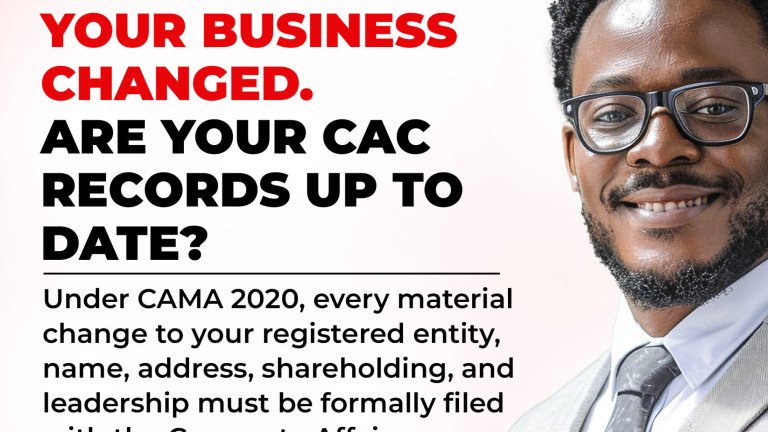
Directors, proprietors, or trustees may change, addresses may be updated, ownership or partnership interests may be transferred, governing documents may be amended, and business activities may evolve. Where required, these changes must be properly recorded and filed with the CAC. Registered entities also carry recurring compliance obligations and periodically need official CAC documents and reports throughout their lifetime.
That is what CAC post-incorporation, or post-registration compliance, covers: keeping the statutory record current and meeting the ongoing filing requirements that follow registration.
This guide explains how to process CAC post-incorporation filings in Nigeria, organised by entity type:
- Business Names
- Companies
- Incorporated Trustees
- Limited Partnerships (LPs)
- Limited Liability Partnerships (LLPs)
It also explains how those filings are submitted on the current CAC iCRP portal, the difference between recurring compliance and one-off changes, and why an accurate register matters throughout the life of the entity.
What Is CAC Post-Incorporation?
CAC post-incorporation refers to the filings, applications, updates and official-record services required after an entity has been registered or incorporated with the Corporate Affairs Commission.
For a company, the usual term is post-incorporation. For a Business Name, the same work is often called post-registration. The idea is the same. Once the entity exists on the register, changes to its registered information, management, ownership, governance, activities, address or legal status have to be reflected in the official record.
How to process CAC post-incorporation filings becomes clearer when those services are grouped into six areas:
- Annual and recurring compliance filings
- Changes to leadership, ownership and governance
- Changes to registered business information
- Changes to governing documents, capital and structure
- Official CAC reports and documents
- Cessation, striking off, dissolution and liquidation
The Commission does not only register entities. It also maintains the public registry and processes the post-incorporation work that keeps that registry usable for banking, regulation and due diligence.
Why CAC Post-Incorporation Filings Matter
An entity can be legally registered and still have an outdated CAC record. A company may have changed its directors without filing the change. A Business Name may have moved without updating its registered address. An Incorporated Trustee may have appointed new trustees without completing the required process.
Those gaps usually surface when the entity needs to open or update a bank account, apply for a licence, complete a regulatory application, sign a major contract, raise finance, pass due diligence, or process another CAC filing. The entity may also need to prove who currently owns it, who manages it, and who has authority to act.
Post-incorporation compliance keeps the public record aligned with the current position of the entity. Banks, investors, regulators and licensing bodies rely on that record before they proceed. When the register no longer matches reality, the transaction is the one that stalls.
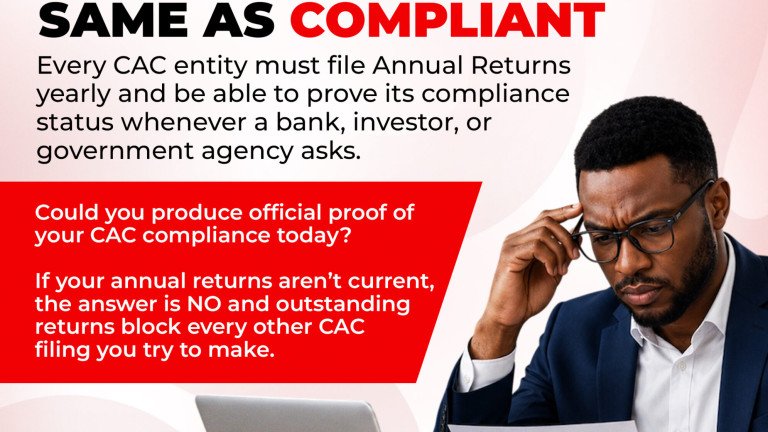
Falling behind on statutory filings, particularly annual returns, has a direct cost. Late filings attract penalties. Outstanding annual returns can stop further post-incorporation applications until the compliance position is regularised. A missed filing today can delay an unrelated, time-sensitive filing later.
Filing Post-Incorporation Requests on the CAC iCRP Portal
Most people who need to know how to process CAC post-incorporation filings will do so through a CAC-accredited agent. Accredited agents are persons or institutions certified by the Commission to submit pre-incorporation and post-incorporation applications on behalf of businesses and organisations. The official filing route is the iCRP Post Incorporation workflow.
On the current iCRP system, the process for how to process CAC post-incorporation filings is straightforward:
- The agent logs into the dashboard.
- From the main dashboard, select Post Incorporation.
- The portal opens the post-incorporation landing page.
- Search for the entity the filing relates to.
- Open that entity’s dashboard.
- Select and complete the relevant post-incorporation filing.
- If the CAC raises a query, answer it on the same application.
Every post-incorporation filing is still reviewed manually by a CAC approving officer. Processing time follows that review, not the fact that the application was submitted online.

The Filing Types Every Entity Encounters
A handful of filing types appear across almost every structure. The form and deadline change by entity, but the purpose does not. The list below is the shared vocabulary for the entity sections that follow.
- Annual returns: a yearly filing, due whether or not the entity traded, confirming that it is still active and reporting its current officers, address and, for companies, its financial position.
- Change of name: a formal update to the registered legal name, after a name availability check and, for companies, a special resolution.
- Change of address: an update to the registered office or principal place of business on file with the CAC.
- Change of principal or officer: the appointment, resignation or removal of the people who run or own the entity, whether director, proprietor, partner, trustee or secretary.
- Correction of particulars: a filing that corrects a detail already on record, such as a misspelt name or an outdated personal address, rather than replacing the person.
- Certified True Copy and Status Report: official CAC documents used to replace a lost certificate or to prove current registration details to a third party.
- Cessation, dissolution or striking off: the formal process for closing an entity that has stopped operating, which stops further annual return obligations from accruing.
How to Process CAC Post-Incorporation Filings by Entity Type
The CAC does not use one generic post-incorporation form. Each structure has its own dashboard and its own list of notices. To process CAC post-incorporation filings correctly, identify the entity type first, then select the filing that matches the change. SplashDict’s post-incorporation services follow that same split.
1. CAC Post-Registration Services for Business Names
A business name is tied to its proprietor or partners, its principal place of business and the n
ature of business on file. After registration, those details are updated on the existing BN record. They are not reset by a new registration.
The usual filings are annual returns; a status report or certified true copy of the certificate; change of proprietor or partners; correction of proprietor or partner particulars; change of business name; change of nature of business; change of business address; and cessation when the name is no longer in use.
Annual returns for business names are generally due by 30 June each year, except in the calendar year of first registration. Until cessation is filed, those returns continue even if the business has stopped trading.
| Service Name | Fee | File Now |
|---|---|---|
| Annual Returns Acknowledgement Letter for Business Name (CTC) | ₦15,000 | |
| Annual Returns for Business Name | ₦15,000 | |
| Certificate of Registration for Business Name (CTC) | ₦15,000 | |
| Cessation of Business Name | ₦25,000 | |
| Change of Address of Business Name | ₦25,000 | |
| Change of Name of Registered Business Name | ₦35,000 | |
| Change of Objects for Business Name | ₦25,000 | |
| Change of Proprietor/Partner(s) | ₦25,000 | |
| Correction of Proprietor/Partner(s) Information | ₦25,000 | |
| Letter of Good Standing for Business Name | ₦20,000 | |
| Status Report for Business Name | ₦15,000 |
Update a registered business name
2. CAC Post-Incorporation Services for Companies
Companies generally carry the broadest range of post-incorporation filings of any entity type, because their structure may involve shareholders, directors, a company secretary, Persons with Significant Control, share capital, charges, and governing documents, each generating its own category of change.
The usual filings are annual returns; alteration of the Memorandum and Articles of Association; change of company name; change of company registered address; change of company secretary; change of director; changes in particulars of directors, shareholders, or guarantors; change or cessation of a Person with Significant Control; increase or reduction in issued share capital; a status report, letter of good standing, or certified true copy of the certificate, annual returns acknowledgement, or MEMART; and cessation, striking off, or dissolution when the company is closed.
Annual returns are due within 42 days of the company’s Annual General Meeting, with new companies exempt for their first 18 months, or on or before 31 December for small companies.
3. CAC Post-Incorporation Services for Incorporated Trustees
Incorporated trustees are the CAC structure used by churches, mosques, NGOs, foundations and associations. After incorporation, the register records the name, constitution, objects, trustees, chairman and secretary. Changes to those particulars are post-incorporation filings. Some trustee changes still require public notice before the Commission will approve them.
The usual filings are annual returns; a status report or certified true copy; change of trustees; change in trustee particulars; appointment or change of chairman; change of secretary; change of name; change of registered address;
amendment of the constitution and objects; and dissolution when the organisation is closed. Settle outstanding liabilities before completing a dissolution filing.
Annual returns are due within 42 days of the organisation’s Annual General Meeting, exempt for the first 18 months, or on or before 31 December.
Update an incorporated trustee
4. CAC Post-Incorporation Services for LPs
A limited partnership has at least one general partner with unlimited liability and one or more limited partners who do not manage the firm. After registration, post-incorporation filings keep the name, partners, principal place of business, nature of business and partnership agreement aligned with the actual firm.
The usual filings are annual returns; a status report or certified true copy; change of name; change in principal place of business; change in the general nature of business; change of partnership agreement; partner updates, including partner particulars, contribution and liability; and cessation when the firm is wound down.
5. CAC Post-Incorporation Services for LLPs
An LLP is a body corporate with separate legal personality and limited liability for its partners. After registration, its post-incorporation list mixes partnership filings with company-style control and security filings.
The usual filings are annual returns; a status report, letter of good standing or certified true copy; change of name; change of registered address; change of principal business activity; change of partnership agreement; partner and designated partner updates; Persons with Significant Control filings; registration or satisfaction of a charge; and voluntary striking off or cessation when the LLP is closed.

What Happens After a Filing Is Submitted?
Submitting an application is not the same as the change appearing on the official record. How to process CAC post-incorporation filings includes the review stage that follows payment and upload.
- The application information is completed.
- Applicable statutory fees are paid.
- Supporting documents are uploaded where required.
- The application is submitted.
- The CAC reviews the filing and moves it to Pending.
- A query may be raised if information or documents need correction.
- The filing is approved when the requirements are satisfied.
- The acknowledgement letter, status report, certificate, constitution, MEMART, partnership deed or letter of good standing can then be downloaded.
Common Reasons Filings Are Queried
A filing is queried when the information submitted is incomplete, inconsistent, unclear or does not support the change being requested. The usual reasons are:
- Outstanding annual returns: unfiled or unpaid returns can stop other post-incorporation applications.
- Missing corporate authority: the filing may need a resolution, consent, minutes or instrument of appointment. If that authority is missing, the application is sent back.
- Inconsistent information: names, registration numbers, dates, shareholdings, addresses and other details must match across the form, the resolutions and the supporting documents.
- Incorrect entity information: the details entered must correspond with the existing CAC record and the transaction being filed.
- Unclear documents: blurred, cropped or incomplete scans of resolutions, notices or newspaper publications are a frequent source of queries.
- Wrong file format or size: the iCRP generally requires PDF uploads, with a maximum file size of 5MB.
- Insufficient supporting documents: each filing has its own pack. A partial upload is not enough.
- Defective newspaper publication: where publication is required, the uploaded evidence must be clear and must match the application.
- Wrong filing category: selecting the wrong post-incorporation service returns the application for correction.
- Unresolved earlier queries: a related filing that is still queried can hold the new application.
- Payment issues: filing fees or stamp duty that do not reflect correctly on the portal will stall processing.
Review the full pack before submission so the form, the resolutions and the uploads tell the same story. On iCRP, queries appear in the application’s Query History. The filing can then be amended and resubmitted.
What Happens If You Do Not Update Your CAC Records?
When an important change is not filed, the gap appears at the worst time. A bank may question a mismatch in directors or signatories. An investor may pause due diligence because the ownership record is stale. A person acting for the business may struggle to prove authority. An overdue annual return can prevent the next filing from being processed.
Keeping post-incorporation records current means that when the business needs a bank, regulator, investor, licence, contract or new CAC filing, the register already supports the position being presented. When the business changes, the CAC record should change with it.
How SplashDict
Helps With These Filings
SplashDict is a CAC-accredited filing platform staffed by ICSAN-licensed chartered secretaries. The platform processes CAC post-incorporation filings across business names, companies, incorporated trustees, limited partnerships and limited liability partnerships: identifying the correct notice, preparing the file, submitting it on iCRP and delivering the updated CAC documents.
Process a Post-Incorporation Filing →

SplashDict Limited is a corporate secretarial and business support services firm registered in Nigeria. It is not a law firm and does not provide legal advice. Statutory references in this article reflect general provisions of CAMA 2020 and current CAC iCRP practice; always confirm the specific requirements applicable to your filing.